The Science Behind Set-Piece Strategies: Data-Driven Insights in Football
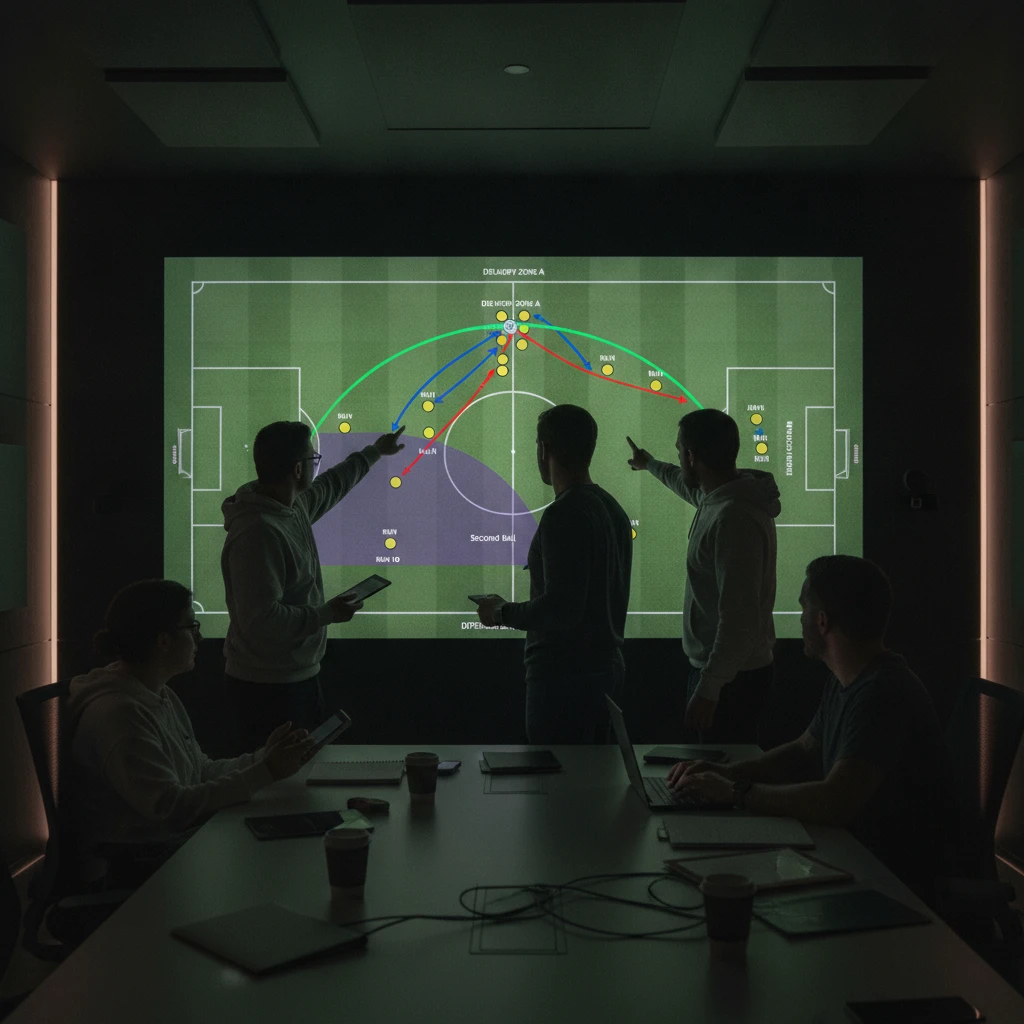
Set pieces turn a brief pause in play into a structured chance to attack or defend. Corners, free kicks, and throw-ins can be studied through data, but their value depends on more than whether the next attempt ends in a goal. Shot location, delivery type, player positioning, and the opponent’s defensive setup help explain how a routine creates an advantage.
For coaches and analysts, the useful question is not simply, “How many goals did we score?” It is whether a team repeatedly creates good opportunities, executes its plan, and adapts when opponents respond.
Why Set Pieces Matter in Football Analytics
Set pieces matter in football analytics because they create repeatable situations that teams can prepare for and measure separately from open play. They offer a chance to examine how a planned action, player roles, and delivery combine under match conditions.
Open play changes from moment to moment. A corner kick or indirect free kick, by contrast, often gives the attacking team time to assign starting positions and coordinate movement. That makes set pieces a useful area for tactical analysis, though execution remains affected by pressure, timing, and individual skill.
Teams can track attacking and defensive performance separately for corners, direct and indirect free kicks, and throw-ins. This matters because these situations ask different questions. A corner may be designed to create a first contact near goal; a long throw-in may target a crowded penalty area; a free kick may aim for a shot, a second ball, or a rehearsed pass.
Separating these phases can reveal patterns hidden by team-wide totals. A side may concede few goals from corners while still allowing opponents to win frequent, dangerous headers. Another may score rarely but consistently create shots from favorable locations. Chance creation and goals scored are related, but they are not the same measure of performance.
The Metrics That Reveal Set-Piece Quality
Useful set-piece metrics connect the delivery to the chance that follows. Shot location, expected goals (xG), delivery accuracy, and outcomes per opportunity provide a stronger picture together than any single total.
Shot location describes where an attempt is taken from, while xG estimates the probability that a shot becomes a goal based on factors such as location and shot type. For set pieces, analysts can compare the number and quality of shots produced per corner or free kick. A near-post touch that becomes a weak, pressured header should not be judged like a clean attempt from close range.
Delivery measures need clear definitions. Analysts might record whether a ball reaches its intended zone, whether an attacker makes first contact, and whether the delivery creates a shot or a dangerous second ball. A successful delivery does not always lead to a shot, and a missed target can sometimes cause a defensive scramble. The metric should reflect the routine’s actual objective.
- Opportunity rate: How often a set piece produces a shot, a first contact, or another planned outcome.
- Chance quality: Total and average xG per set piece, interpreted alongside shot location and pressure.
- Delivery profile: Inswinging, outswinging, driven, lofted, short, or low delivery, recorded by target zone.
- Follow-up actions: Second-ball recoveries, blocked shots, clearances, and possession retained after the initial delivery.
Use rates as well as totals. A team with 12 corners has more chances to generate a shot than a team with four, so raw counts can mislead. Per-opportunity figures help compare performance, but small samples can swing sharply after just one match.
How Teams Design and Vary Their Routines
Teams design set-piece routines by coordinating player positioning, movement, blocking, and delivery around a clear target. Planned variations help preserve the threat when opponents begin anticipating a familiar pattern.
A corner routine might place attackers in a cluster, then send one runner toward the near post while another attacks the far post. A teammate can screen a defender legally by holding a route rather than grabbing or pushing. The delivery must arrive at the right height and pace for the runners’ timing; a well-designed movement can fail if the ball is overhit.
Good routines assign roles before the ball is played. Players need to know who attacks the first contact, who looks for a rebound, who protects against a counterattack, and who offers a short option. The same logic applies to free kicks and throw-ins, although the permitted restart and available space differ.
Analysts can help coaches build a compact routine library rather than a long list of complicated plays. For example, a team might retain one near-post corner, one far-post delivery, and one short-corner variation. The choice can then depend on the opponent’s positioning, the available taker, and the score or time remaining.
Variation is valuable when it changes the defensive problem. Changing only the runner’s starting spot may achieve little if the delivery and target stay predictable. Conversely, repeating a successful routine can be sensible when the opponent has not found a reliable answer. Novelty is not the goal; creating a favorable contest is.
Reading the Opposition Before the Ball Is Played
Opposition analysis helps teams choose set-piece routines by showing how a rival defends, where space appears, and which players are assigned to key areas. Video and event data together help distinguish a real tendency from an isolated incident.
Analysts can review whether a team uses zonal marking, player-to-player assignments, or a hybrid system on corners. They can note the number of defenders near the goal line, the position of the goalkeeper, and how the defense responds to short corners. For free kicks, useful details include the wall’s position, the defensive line’s depth, and the space behind it.
Look for repeatable vulnerabilities, not a single conceded goal. Does a defender regularly lose track of runners when attackers cross paths? Does the goalkeeper stay close to the line on outswingers? Does the team leave space around the edge of the box for a second-phase shot? Video allows coaches to check whether these patterns appear across multiple matches and against different opponents.
Build the scouting report around actions the team can use. If the opponent pushes its line high, a delivery over the defense may be worth rehearsing. If it crowds the six-yard area, a short corner could create a better crossing angle. Each option has a cost: short routines can lose momentum or invite a counterattack if the ball is carelessly given away.
Turning Analysis into Training and Match-Day Decisions
Teams turn set-piece analysis into improvement by converting observed patterns into specific practice tasks, player responsibilities, and match-day options. Training should test whether a routine works at realistic speed, not just whether players remember their positions.
Start with one question from the data or video: for instance, are deliveries reaching the target zone, but attackers losing the first contact? The training response differs from a problem with delivery accuracy. In the first case, coaches might adjust runs and starting positions; in the second, they may work with the taker on trajectory, pace, or foot selection.
Use a simple review loop:
- Diagnose: Identify a recurring outcome using event data and video.
- Design: Choose a routine with clear roles and a measurable objective.
- Rehearse: Practice against a realistic defensive setup, including rebounds and transitions.
- Review: Check execution and opportunity quality, then keep, adjust, or retire the routine.
Before a match, coaches can select a small number of options for likely situations. On match day, substitutions, fatigue, weather, and the score can change which delivery or target makes sense. A shorter corner may help draw out a compact defense; a direct delivery may be preferable when players are strong in the air and time is running short.
Keep training records focused on execution as well as outcomes. A routine that produces no goal in a short practice may still be well executed, while a poorly repeated play might happen to end in a finish. Data is most useful when it gives coaches a better question to take onto the pitch.
What the Data Cannot Tell You on Its Own
Set-piece data cannot explain every outcome because samples are small, match conditions change, and numbers often miss the movement that created or disrupted an opportunity. Analysts should pair metrics with video and coaching judgment.
A few corners can produce a misleading xG average. One high-quality chance may lift the figure, while a well-designed routine may generate several useful first contacts without a shot. Expected goals describes shot probability, not the quality of every action before the attempt or the likelihood that a routine will keep working against future opponents.
Execution and context also matter. A delivery can be affected by wind, pressure on the taker, a late change in personnel, or a defender’s intervention. Set-piece routines may become less effective once opponents recognize the movement. That makes opponent adaptation part of the analysis, not an afterthought.
Three common errors are worth avoiding:
- Judging only by goals: Goals are memorable, but a short run can hide consistent chance creation or poor delivery. Review opportunity-level measures and video over a broader period.
- Treating xG as a verdict: A high set-piece xG can indicate promising chances, but it does not prove that the routine caused them or that the team will repeat them. Check the sequence and the number of observations.
- Copying a routine without its conditions: A play that works for another team may depend on different player strengths or delivery quality. Adapt the principle to the squad rather than borrowing the choreography.
The strongest evaluation combines event data, shot location, video review, and informed coaching assessment. Data can show where to look; it cannot replace the coach’s judgment about whether players can execute the plan or whether it suits the match.