The Role of Expected Goals (xG) in Modern Football Analysis
Understanding Expected Goals (xG)
Expected Goals (xG) is a statistical metric that estimates the probability of a shot resulting in a goal based on shot quality. It quantifies how many goals a team or player is expected to score given the chances they create, offering a deeper view beyond actual goals scored.
The essence of xG lies in evaluating each shot’s likelihood of success by considering factors like shot location, angle to goal, shot type, and defensive pressure. By aggregating these probabilities, xG provides an objective measure of performance that accounts for chance quality rather than just outcomes. This helps coaches, analysts, and fans understand whether a team’s attack is genuinely effective or just fortunate.
How is xG Calculated?
xG values are generated through complex probability models that analyze extensive shot data from football matches. These models use features such as shot distance, angle, assist type, body part used, and defensive positioning to assign a success probability to each attempt.
The calculation process involves machine learning or logistic regression techniques trained on historical shot outcomes. Each shot is treated as an event with associated attributes; the model produces a numerical value between 0 and 1 indicating the chance of scoring. For example, a penalty kick might have an xG of around 0.76, implying a 76% chance of scoring, whereas a long-range shot with a defender nearby might be closer to 0.02.
These probabilities are then totaled to produce a cumulative xG for players, teams, or matches. Some providers also incorporate contextual factors like match situation or shot buildup to refine precision. While approaches differ, the core relies on data-driven shot quality assessment from large football analytics datasets.
Practical Uses of xG in Football
xG has become an indispensable tool for teams, coaches, and analysts aiming to elevate player performance and tactical effectiveness. Teams use xG to analyze attacking efficiency—identifying if a low goal tally stems from poor chance creation or finishing issues.
- Player performance evaluation: xG helps quantify a striker's finishing ability relative to the quality of chances they receive, differentiating clinical finishers from those underperforming.
- Tactical analysis: Coaches assess how different formations or strategies impact shot quality and xG generation, allowing data-driven adjustments in game plans.
- Opposition scouting: Analysts evaluate opponents’ defensive weaknesses by studying the xG of shots they concede, informing defensive drills and marking assignments.
- Fan engagement and commentary: xG offers fans and media a richer narrative by explaining discrepancies between shots, goals, and match results.
In live match scenarios, real-time xG data can guide substitutions and tactical shifts. Over a season, aggregated xG serves as a predictive indicator of future goal output, making it valuable for player recruitment and contract negotiations.
Benefits of Using xG Metrics
The key advantage of xG lies in its ability to measure shot quality rather than raw output like goals scored. Unlike traditional statistics, xG accounts for the context behind each opportunity, providing a fairer evaluation of attacking performance.
- More accurate performance insights: Teams can quantify how well they create chances independent of luck or finishing fluctuations.
- Reduces randomness: Since goals can be influenced by factors like goalkeeper excellence or deflections, xG smooths out these anomalies to show underlying quality.
- Improves decision-making: Coaches and analysts gain actionable data to tweak tactics or training focus areas with measurable impact.
- Supports talent identification: Tracking players’ expected goals over time highlights consistent creators or finishers even if current results vary.
Because xG connects raw data with probability models, it bridges the gap between descriptive statistics and predictive insights, marking a major step forward in football analytics.
Limitations and Common Criticisms of xG
Despite its popularity, xG has limitations that users must recognize. The main issue is that it is a probabilistic model based on historical averages, which means it can only estimate likelihoods rather than certainties.
- Contextual factors missed: Variables like weather conditions, player fitness, goalkeeping skill, or psychological pressure are often not fully captured.
- Variability between models: Different data providers use various inputs and modeling approaches, leading to differing xG values for the same event.
- Focus on shots only: xG does not quantify other important aspects such as build-up play, defensive contributions, or passing effectiveness.
- Misinterpretation risks: Casual users might over-rely on xG as a definitive measure rather than one part of a broader analytical toolkit.
Choosing to prioritize xG for its advantages means accepting its partial view of the game. It’s most powerful when combined with other advanced metrics or expert qualitative analysis.
xG within the Broader Football Analytics Landscape
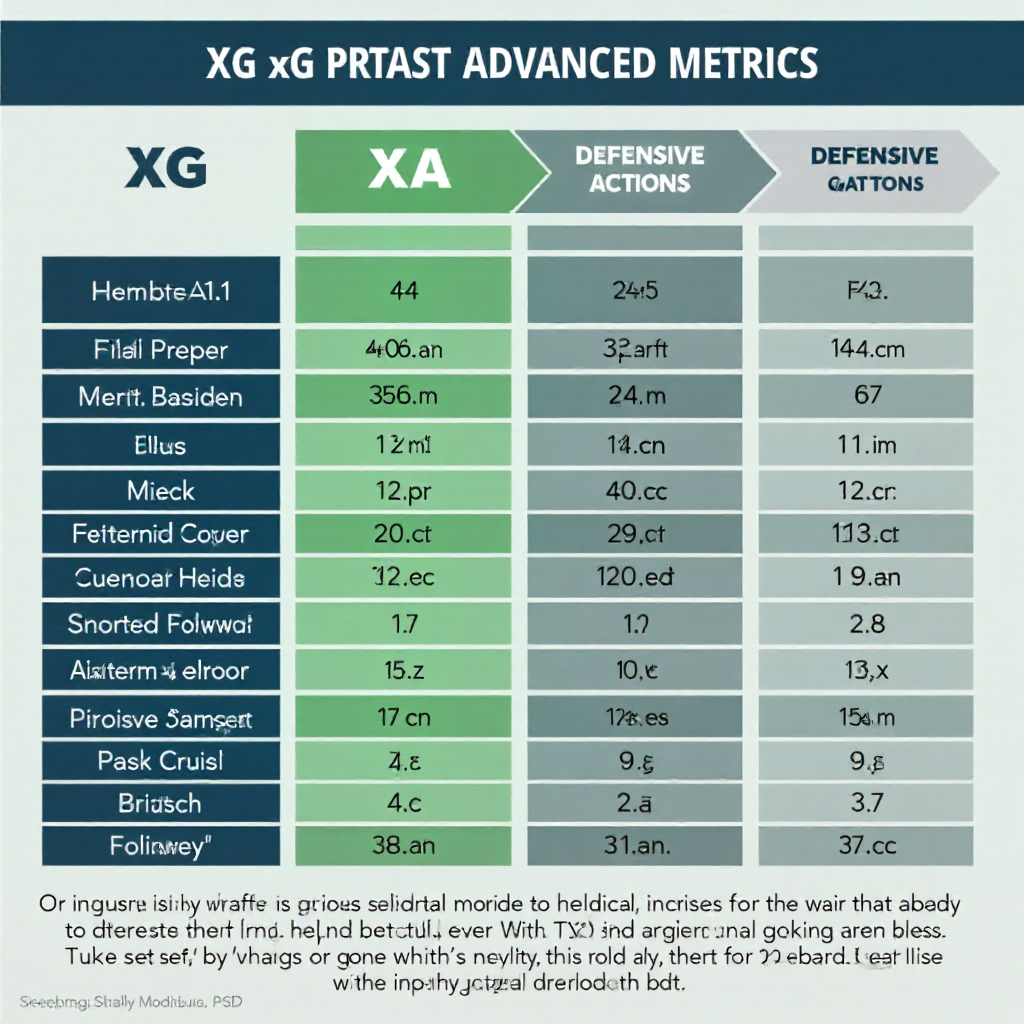
Expected Goals is a cornerstone of modern football analytics but works best in concert with other advanced metrics and data visualization tools. Analysts integrate xG alongside statistics like Expected Assists (xA), pass completion under pressure, and defensive actions to create a multi-dimensional understanding of matches.
Advanced data platforms use interactive visualizations such as shot maps, heat maps, and sequence tracking to contextualize xG within broader tactical frameworks. This enriched information allows coaches to link quantitative findings with on-field strategies precisely.
Moreover, xG’s development parallels trends in multi-sport analytics, where similar probability-based metrics quantify play success in basketball, hockey, and American football. These cross-sport applications reveal shared challenges in modeling complex, fluid scenarios and highlight football’s unique shot-quality emphasis.
As technology advances, integrating xG into machine learning models for predictive outcomes or injury risks signifies its growing role in comprehensive football data ecosystems.
Frequently Asked Questions about Expected Goals (xG)
What differentiates xG from traditional statistics?
xG evaluates the quality of goal-scoring chances rather than simply counting goals or shots, offering a deeper, context-aware measure of team and individual attacking efficiency.
Can xG predict match outcomes reliably?
While xG can indicate which team created better scoring opportunities, it does not guarantee results due to the inherent randomness and other variables influencing actual goals and match dynamics.
How do analysts interpret an individual player’s xG?
Player xG is compared against actual goals scored to assess finishing skill; consistently scoring more than expected highlights clinical finishing, while scoring less may suggest poor conversion or bad luck.
Is xG equally useful across different leagues or styles of play?
xG models can adjust for league-specific factors, but variation in defensive rigor or playing style means interpretation requires contextual knowledge about the competition.
How does xG compare to metrics in other sports analytics?
Similar to metrics like Expected Points Added in American football or Shot Quality in basketball, xG applies probability modeling to assess play effectiveness, reflecting a broader shift toward data-driven performance evaluation across sports.
Expected Goals have revolutionized how football is understood at every level, providing a nuanced lens through which to analyze performances beyond the scoreboard. When combined thoughtfully with other data and expert insight, xG empowers smarter decision-making for teams, enriches fan experience, and continues to push football analytics into a new era of precision and depth.