How Wearable Technology Is Reshaping Football Performance Analysis
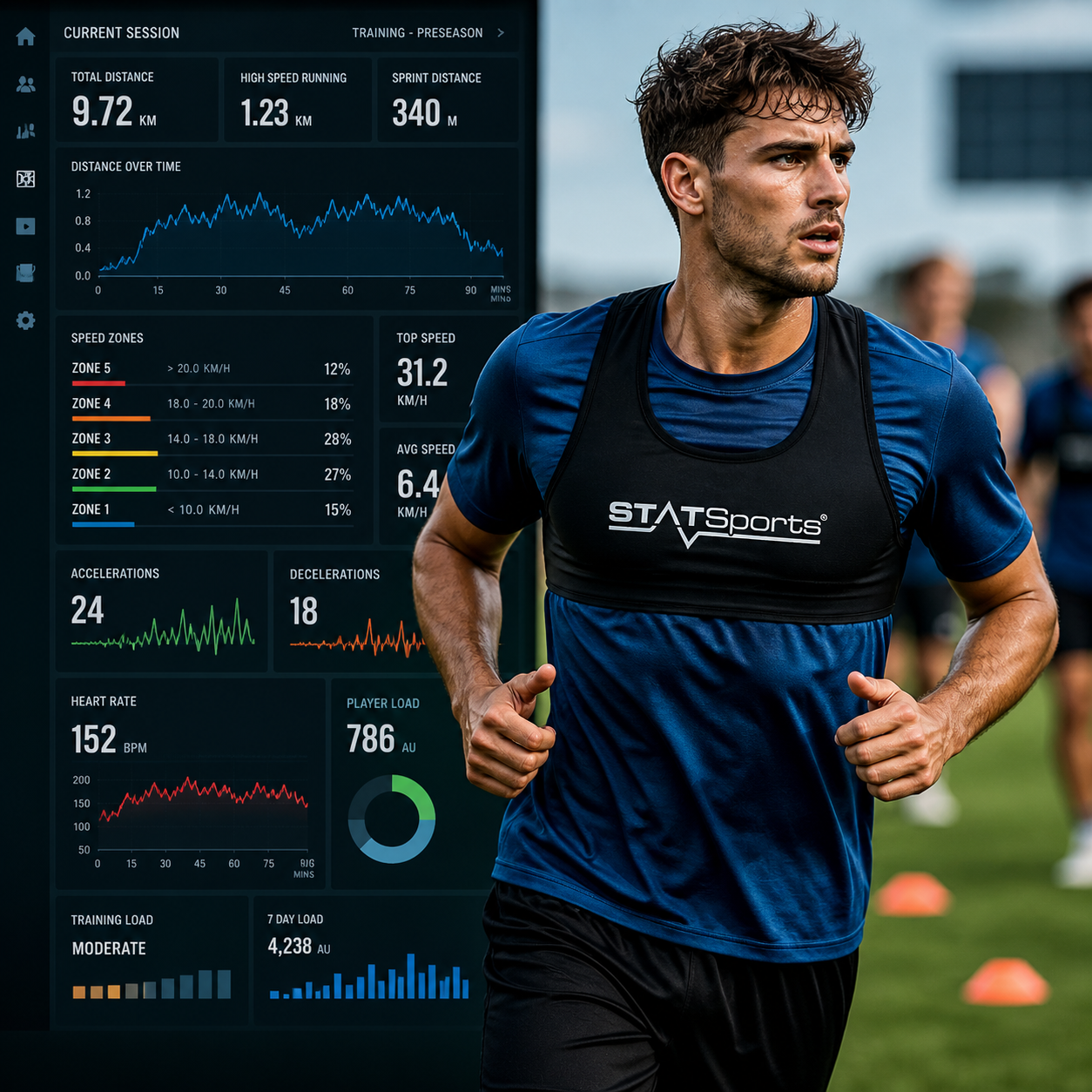
A decade ago, a football coach's instinct about a player's fatigue was exactly that — instinct. Today, that same judgment can be cross-referenced against accelerometer data, heart rate variability scores, and cumulative workload figures collected over the previous 72 hours. The shift from gut feeling to data-driven decision-making is one of the most consequential changes in modern football, and wearable technology sits at the center of it.
What Wearable Technology Means in a Football Context
In elite football, wearable technology refers to sensor-embedded devices worn directly on the body — most commonly in a vest that sits snugly against the upper back — that capture biomechanical and physiological data in real time during training sessions and, where regulations permit, competitive matches.
The most prevalent devices are GPS tracking units combined with inertial measurement units (IMUs) that house accelerometers and gyroscopes. These capture positional data, movement velocity, and multi-directional forces simultaneously. Chest straps or optical sensors add heart rate and HRV monitoring to the data stream. Some clubs have begun experimenting with smart compression garments and skin-contact electrodes that measure muscle oxygenation and hydration markers, though these remain less standardized across the professional game.
What makes football a particularly demanding environment for wearables is the sport's complexity: unpredictable movement patterns, physical contact, and the need to capture data across 25 or more players simultaneously during squad sessions. The hardware has evolved to meet that challenge — modern GPS vests weigh under 60 grams and sample positional data at up to 18 Hz, generating thousands of data points per player per session.
Key Metrics Wearables Track in Football
The most analytically significant wearable outputs in football fall into two categories: physical load metrics and physiological markers. Together, they give sports scientists a layered picture of what a player's body is doing and how it is responding.
On the physical side, player load — a composite measure of accelerations, decelerations, and changes of direction — has become the standard currency of workload monitoring. Total distance covered and high-speed running distance (typically above 5.5 m/s) remain the most widely reported figures, but they tell an incomplete story. A winger who covers 11 km at moderate intensity and a central midfielder who covers 10 km with 40 high-intensity sprints are experiencing very different physiological demands, and raw distance obscures that difference.
Accelerometer data fills that gap. Peak acceleration values, deceleration loads, and repeated sprint ability metrics reveal the mechanical stress on muscles and tendons that GPS distance alone cannot. Heart rate variability adds the physiological layer: a suppressed HRV reading in the morning before a session is one of the more reliable indicators that the autonomic nervous system is under strain, signaling that a player may need a reduced training stimulus that day.
Other tracked variables include sprint count and peak sprint speed, jump load (relevant for heading-heavy defenders and aerial attackers), and positional data that maps a player's actual coverage zone against their tactical assignment.
From Raw Data to Actionable Insight
Raw wearable output is not insight — it is noise until it passes through an analytical pipeline. The journey from sensor to decision involves three distinct stages: collection, processing, and interpretation.
Data collected during sessions is uploaded — often automatically via Bluetooth or cellular connection — into performance analytics platforms such as Catapult's OpenField, STATSports Apex, or similar systems. These platforms aggregate multi-session histories, calculate rolling workload ratios (the acute-to-chronic workload ratio, or ACWR, remains widely used despite ongoing academic debate about its predictive precision), and flag statistical anomalies.
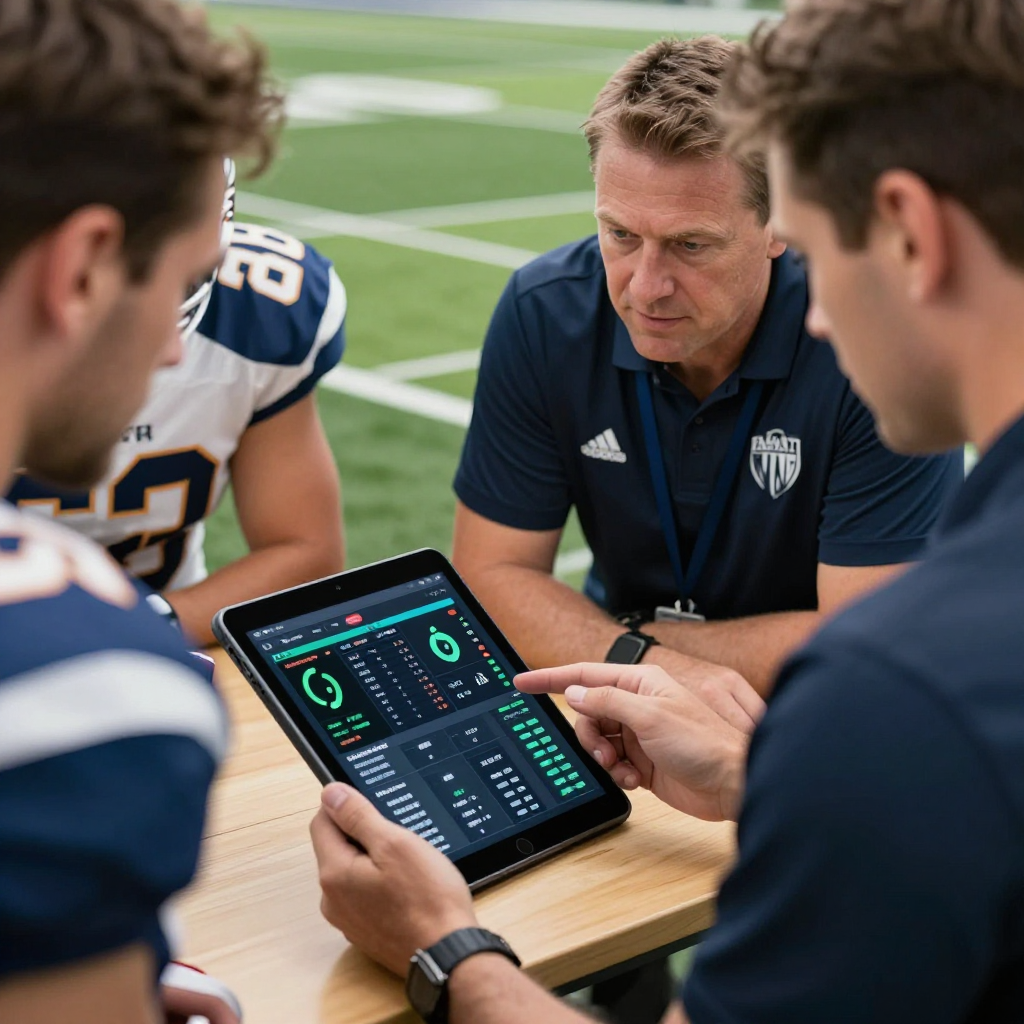
The interpretation stage is where sports scientists and performance coaches apply domain expertise. A platform can surface the fact that a player's session load was 40% above their four-week rolling average; it takes a human analyst to weigh that figure against the player's injury history, the upcoming fixture schedule, and their subjective wellness score from that morning's questionnaire. The data narrows the decision space — it rarely makes the decision itself.
This is a point worth emphasizing for anyone entering sports analytics: the value of wearable data scales with the quality of the questions being asked of it. Clubs that treat analytics platforms as dashboards to glance at are extracting a fraction of the available value compared to those that have built structured workflows around the data.
Wearables and Injury Prevention
Wearable technology's most compelling application in football is injury prevention and recovery management. Soft-tissue injuries — hamstring strains in particular — account for a significant proportion of missed matches at elite level, and workload monitoring has become the primary tool for managing the physical conditions that precede them.
The underlying principle is straightforward: players who experience sudden spikes in training load relative to their recent history are at elevated injury risk. GPS and accelerometer data allow performance staff to quantify that spike with precision rather than approximation. A player returning from a minor muscle strain, for example, can be reintroduced to full training with a defined load ceiling — say, no more than 80% of their pre-injury session average — and that ceiling can be tracked objectively rather than estimated visually.
HRV monitoring adds a recovery dimension. When combined with subjective wellness data (sleep quality, muscle soreness ratings), it helps identify players who are accumulating fatigue across a congested fixture period even when their training loads appear manageable. Some clubs now use morning HRV readings as a standard input into daily training load decisions, adjusting individual session prescriptions accordingly.
The honest caveat: wearables reduce injury risk; they do not eliminate it. Contact injuries, freak accidents, and the inherent unpredictability of football mean that no data system can guarantee a squad free of soft-tissue problems. What the evidence does support is that structured workload monitoring, applied consistently, is associated with lower rates of non-contact soft-tissue injury over a season.
Tactical Applications — Using Wearable Data to Shape Game Plans
Physical performance data and tactical analysis are increasingly inseparable. Wearable outputs now inform decisions that extend well beyond the training ground, shaping substitution timing, positional demands, and weekly periodization.
Understanding the tactical and physical KPIs of specific positions is one direct application. A high-pressing system places very different demands on wide midfielders compared to a low-block defensive structure — and wearable data from match simulations and competitive games allows staff to quantify those demands and build position-specific load benchmarks. A player who consistently falls below their high-speed running threshold in the final 20 minutes of matches is telling the coaching staff something about their aerobic capacity or their accumulated fatigue that subjective observation might miss.
Substitution timing is another area where data has started to influence decisions. Some clubs track in-session metrics during matches (where technology regulations allow) and use real-time data to identify players whose physical output has declined below a defined threshold — a more objective basis for substitution than visual assessment alone.
Training load periodization around match schedules — structuring the week so that physical peaks align with match day and recovery periods are protected — relies heavily on the accumulated workload data that wearables provide. Without that data, periodization is largely theoretical; with it, it becomes measurable and adjustable.
Challenges and Limitations of Wearable Technology in Football
Wearable technology in football comes with genuine constraints that any serious analytics practitioner needs to understand. Treating the data as infallible is one of the field's more common and costly mistakes.
Data accuracy varies by device quality, satellite signal strength, and player positioning on the pitch. GPS accuracy degrades in stadiums with partial roof coverage, and accelerometer-based load calculations can be affected by how securely the vest sits against the body. These are not reasons to dismiss the data — they are reasons to understand its error margins.
Regulatory constraints add another layer of complexity. FIFA and most national governing bodies currently prohibit the use of electronic performance tracking devices (EPTDs) during official competitive matches unless specifically approved, which limits real-time data collection to training environments for many clubs. The rules around this are evolving, but the gap between training data and match-day data remains a significant analytical limitation.
Data overload is a practical challenge that is underappreciated. A squad of 25 players generating thousands of data points per session creates an enormous volume of information that can overwhelm staff without the analytical capacity to process it meaningfully. Clubs that have invested in hardware without investing in the analytical expertise to interpret it often find that the data sits unused or is reduced to a handful of headline figures that could have been estimated without sensors.
The skill gap in interpretation is arguably the most significant barrier. A sports scientist who understands both the physiological principles behind the metrics and the tactical context of football is a rare and valuable resource — and the shortage of such professionals limits how effectively even well-resourced clubs can leverage their wearable infrastructure.
The Future of Wearables in Football Analytics
The next phase of wearable technology in football will be defined by miniaturization, smarter interpretation, and deeper integration with other data sources. Sensors are already shrinking to the point where they can be embedded in clothing or footwear without affecting player movement, removing the vest entirely from the equation.
AI-driven interpretation is the development with the most transformative potential. Machine learning models trained on large historical datasets can identify patterns in workload and physiological data that precede injury or performance decline with greater sensitivity than rule-based threshold systems. Rather than flagging a player because their load exceeded a fixed percentage, these models can identify subtle multi-variable patterns that human analysts would not detect manually.
Integration with video and optical tracking systems is already underway at the leading clubs. Combining wearable biomechanical data with positional tracking from stadium cameras and event data from match analysis platforms creates a genuinely comprehensive performance picture — one where physical, tactical, and technical dimensions of performance can be analyzed in relation to each other rather than in isolation.
The direction of travel is clear. Wearable technology will become less visible and more intelligent, and the analytical workflows built around it will become more automated. What will not change is the need for skilled practitioners who can translate data into decisions — because in football, as in most human endeavors, the quality of the question still determines the value of the answer.
Frequently Asked Questions
What types of wearable devices are most commonly used by professional football clubs?
GPS tracking vests with integrated accelerometers and gyroscopes are the standard across professional clubs. These are typically combined with heart rate monitors — either chest straps or optical sensors — to capture both physical load and physiological response data. Brands like Catapult and STATSports dominate the market at elite level, though the underlying sensor technology is broadly similar across providers.
How do teams ensure player data from wearables remains private and secure?
Data governance is an increasingly important issue in professional football. Most clubs operate under data protection regulations (such as GDPR in Europe) and have internal policies governing who can access individual player data. Performance analytics platforms typically offer role-based access controls, and player consent — often negotiated through employment contracts — is a legal requirement in many jurisdictions. The ethical dimension of who owns athlete biometric data remains an active discussion across professional sport.
Can wearable technology be used during official matches, or only in training?
Currently, most governing bodies restrict the use of electronic performance tracking devices during official competitive matches. FIFA has approved specific EPTDs for use in matches under certain conditions, but the rules vary by competition and jurisdiction. In practice, the majority of wearable data collection at professional level occurs during training, with match data supplemented by optical tracking systems installed in stadiums.
How does wearable data complement traditional video analysis in football?
Video analysis captures what happens tactically and technically — positioning, decision-making, pressing patterns, set-piece execution. Wearable data captures the physical cost of those actions — how much energy was expended, how intense the effort was, and how the body responded. Together, they allow analysts to ask questions like: "Did our pressing system break down in the second half because of tactical errors or because our midfielders had accumulated too much fatigue?" Neither data source answers that question alone.
What role does a sports scientist play in analyzing wearable technology outputs?
Sports scientists sit at the intersection of the data and the decision. They design the monitoring protocols, validate the data quality, build the analytical models, and translate outputs into recommendations for coaches and medical staff. Critically, they provide the physiological and biomechanical context that prevents raw numbers from being misinterpreted — understanding, for instance, why a high player load reading on a recovery day is more concerning than the same reading after a high-intensity session.